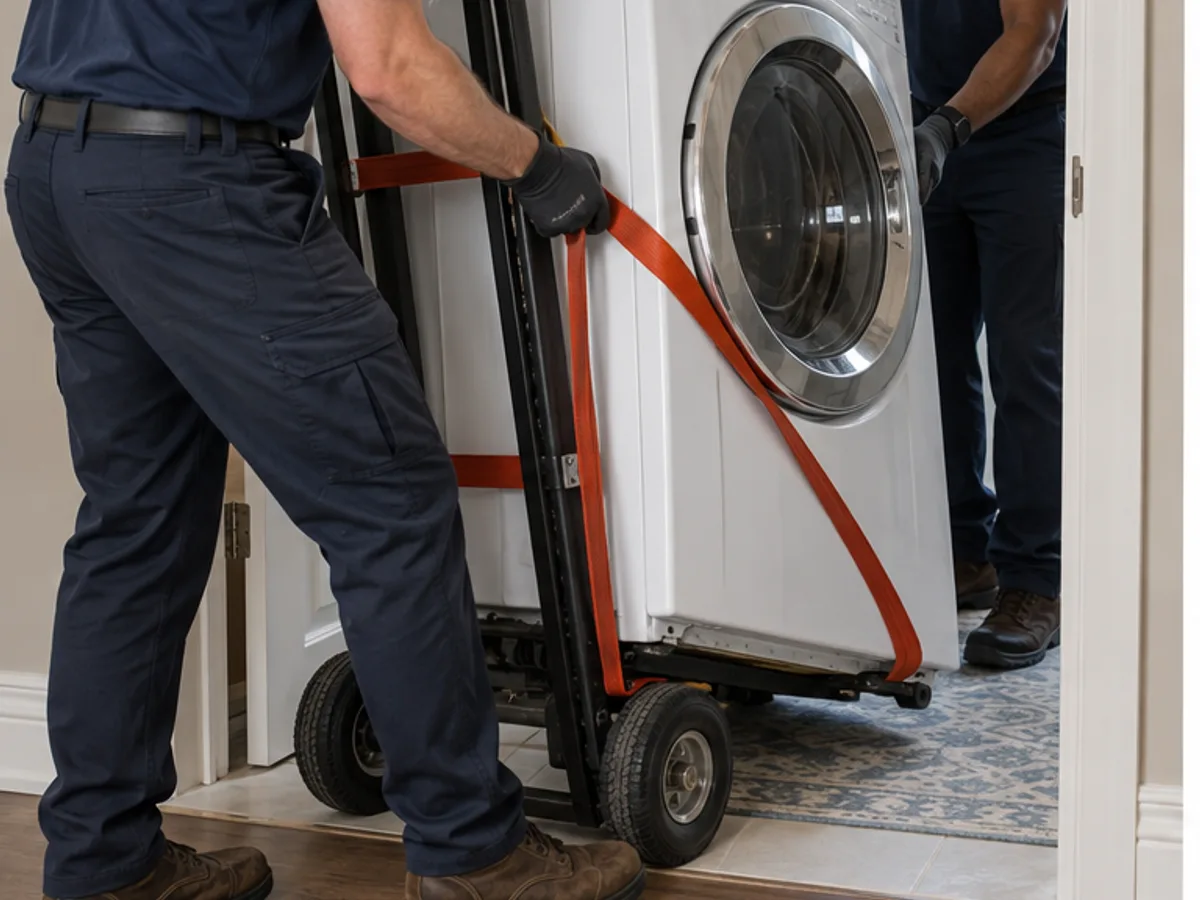
Prepare the machines and the room
Empty both drums. Shut off water supplies, arrange disconnection of the washer hoses, and drain as much residual water as possible. Unplug an electric dryer and detach its vent. A qualified professional should disconnect a gas dryer before removal.
Check the hidden pinch points
Laundry rooms often have enough space around the machine but not enough at the door, landing, or stair turn. Measure the unit and the narrowest point on the path. Note handrails, low ceilings, floor transitions, and doors that cannot swing fully open.
Stacked units need a plan
Do not assume a stacked pair can travel as one piece. Confirm how the manufacturer joins the units and who will separate them. Tell the removal provider whether the upper unit is a dryer and whether the alcove leaves working space at the sides.
Protect against leftover water
Even a drained washer can hold water in the pump and hoses. Keep caps or towels available and protect finished floors. If the washer will be tilted on stairs, mention that route so the crew can plan containment and equipment.
Information that improves an estimate
List each appliance, the floor, stair count, stacked status, disconnection status, and parking distance from the entrance. Those facts are more useful than calling the job a “standard washer pickup.”
Your ready-for-removal checklist
- Drums empty
- Water shut off
- Hoses disconnected and drained
- Dryer vent detached
- Gas disconnected by a qualified professional
- Stairs and doorways measured
Sources and limits
Safety boundaries in this guide draw on U.S. Environmental Protection Agency refrigerant guidance and appliance-specific preparation principles. Follow the appliance manufacturer’s instructions and use qualified trades for gas, hardwired electrical, plumbing, or refrigerant work. Local collection rules change; check the responsible city or county before set-out.