The short answer
Empty the appliance, defrost it early, let it dry, arrange safe disconnection of the water line, and measure the route to the exit. A refrigerator can be unplugged yet still be unready if it contains ice, water, food, or loose glass shelves.
Start before pickup day
Move food to another cold-storage option and follow the manufacturer’s defrosting instructions. Put towels or a shallow tray where meltwater can collect. Never chip ice with a sharp tool; puncturing a sealed component can create a safety and environmental problem.
Measure the whole route
Record the appliance width, depth, and height. Then measure the narrowest doorway, stair turn, and exterior gate. Check whether doors need to be removed from the appliance or hinges, and discuss that work before the appointment rather than during it.
What to tell the removal provider
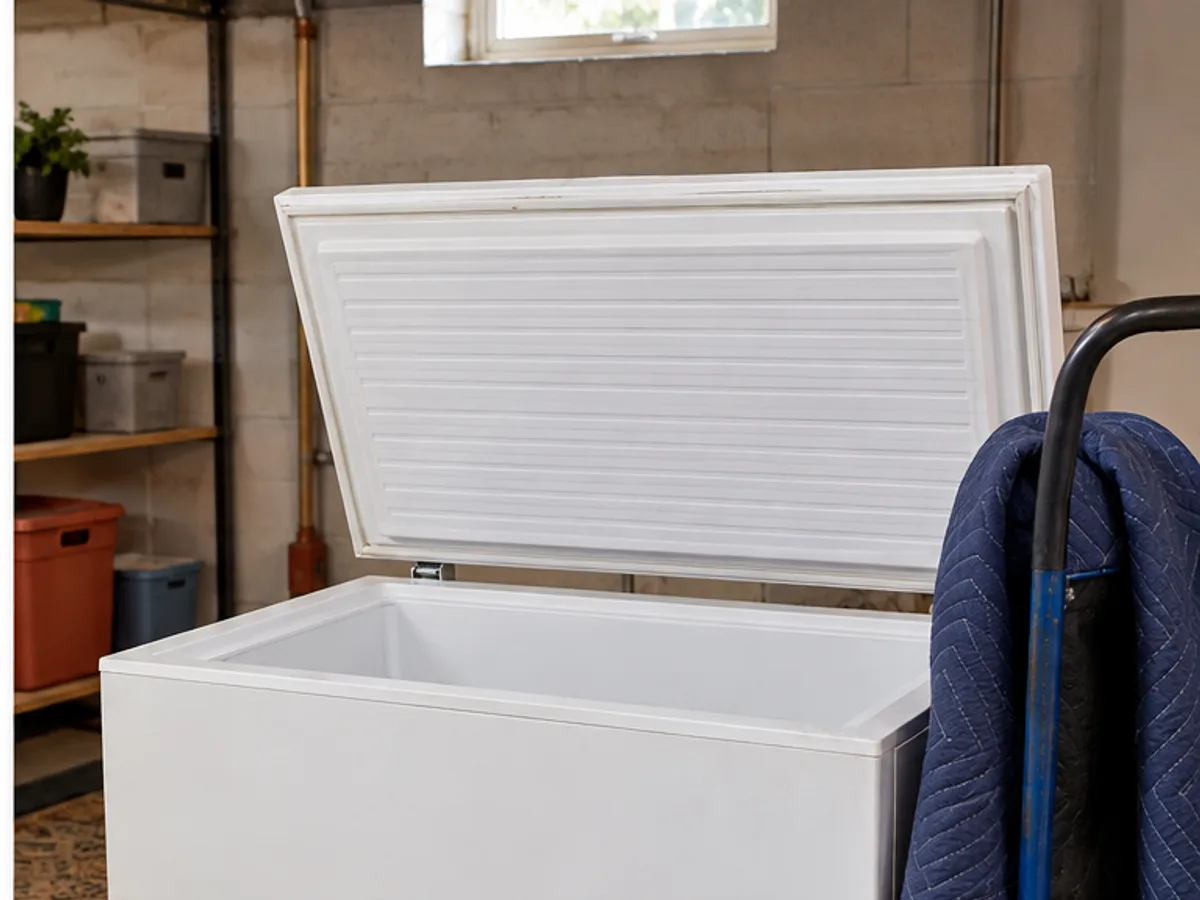
Give the model type, floor, stair count, water-line status, and whether the unit is a standard refrigerator, commercial-size model, upright freezer, or chest freezer. Mention rust, leaks, broken hinges, or a basement location. Photos of the appliance and narrowest part of the route can prevent a poor equipment match.
Keep the sealed system intact
Refrigerators, freezers, and some other cooling appliances contain refrigerants. Do not cut tubing or attempt to release refrigerant. The EPA requires refrigerant to be recovered before final disposal, so the receiving path matters as much as the move itself.
Your ready-for-removal checklist
- Food and ice removed
- Interior dry
- Water line safely disconnected
- Loose shelves secured
- Doorways and stairs measured
- Damage or leaks reported
Sources and limits
Safety boundaries in this guide draw on U.S. Environmental Protection Agency refrigerant guidance and appliance-specific preparation principles. Follow the appliance manufacturer’s instructions and use qualified trades for gas, hardwired electrical, plumbing, or refrigerant work. Local collection rules change; check the responsible city or county before set-out.