Keep the refrigeration system closed
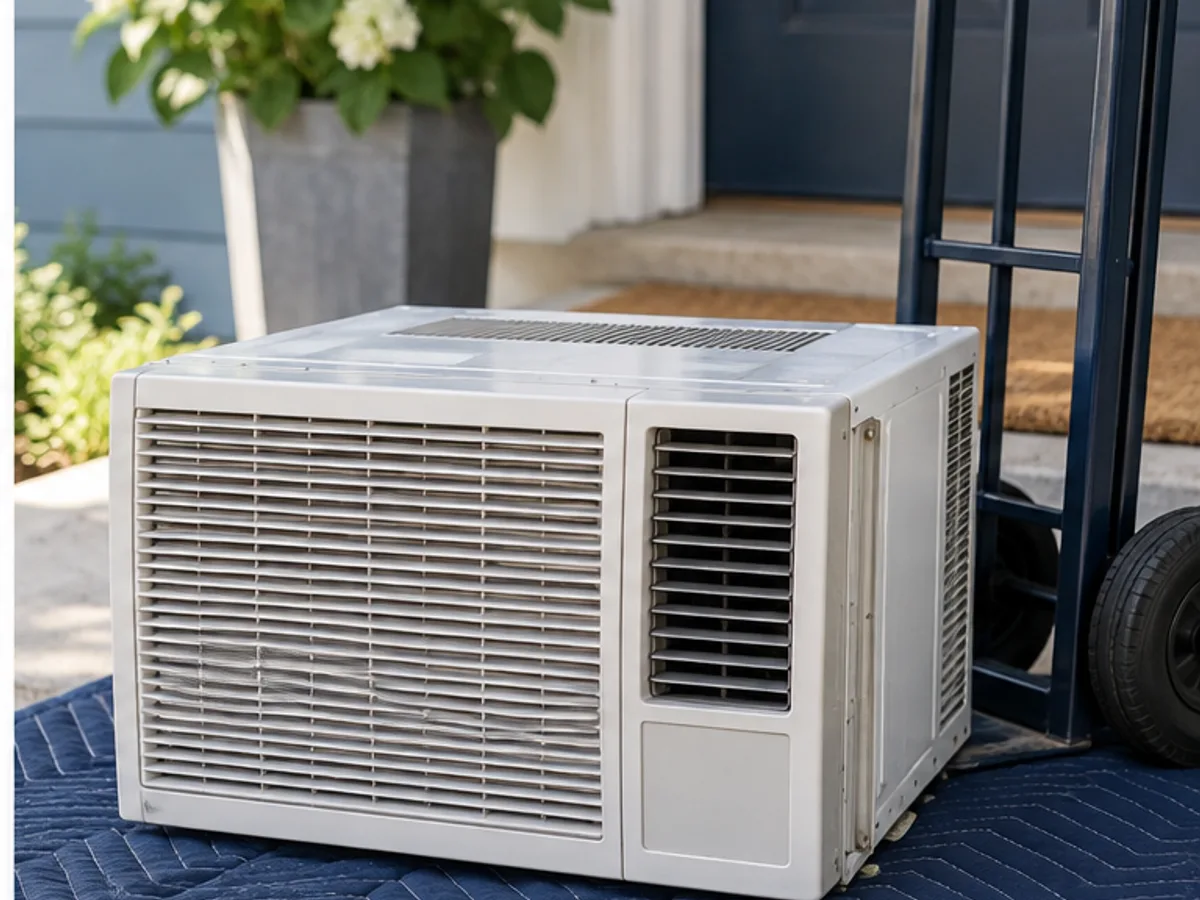
A room air conditioner is not ordinary scrap. Do not puncture coils, cut tubing, or vent refrigerant. Federal rules require refrigerant recovery before final disposal, and that work belongs with properly equipped handlers.
Identify the unit type
Tell the provider whether the unit is a window model, through-wall appliance, or portable floor unit. A through-wall system may be installed in a sleeve and can require work beyond basic haul-away.
Drain and disconnect as directed
Unplug the unit and follow its manufacturer’s instructions for draining stored water. Keep the unit upright where practical. If it is leaking, damaged, or unusually heavy, say so before pickup.
Plan the lift from the window
Window units can sit above furniture, landscaping, or an exterior drop. Remove the appliance from its opening safely before the haul-away appointment unless the provider has specifically agreed to that scope. Never rely on one person to catch a unit from outside.
Confirm the receiving path
Ask how the unit will be handled after pickup. A responsible path accounts for refrigerant recovery and applicable facility rules. Avoid promises that every component will be recycled; acceptance depends on the unit and receiving facility.
Your ready-for-removal checklist
- Unit type identified
- Power disconnected
- Water drained per manufacturer guidance
- Unit kept intact
- Window or wall removal scope confirmed
- Leaks or damage reported
Sources and limits
Safety boundaries in this guide draw on U.S. Environmental Protection Agency refrigerant guidance and appliance-specific preparation principles. Follow the appliance manufacturer’s instructions and use qualified trades for gas, hardwired electrical, plumbing, or refrigerant work. Local collection rules change; check the responsible city or county before set-out.